(And Why You’re Not Alone)
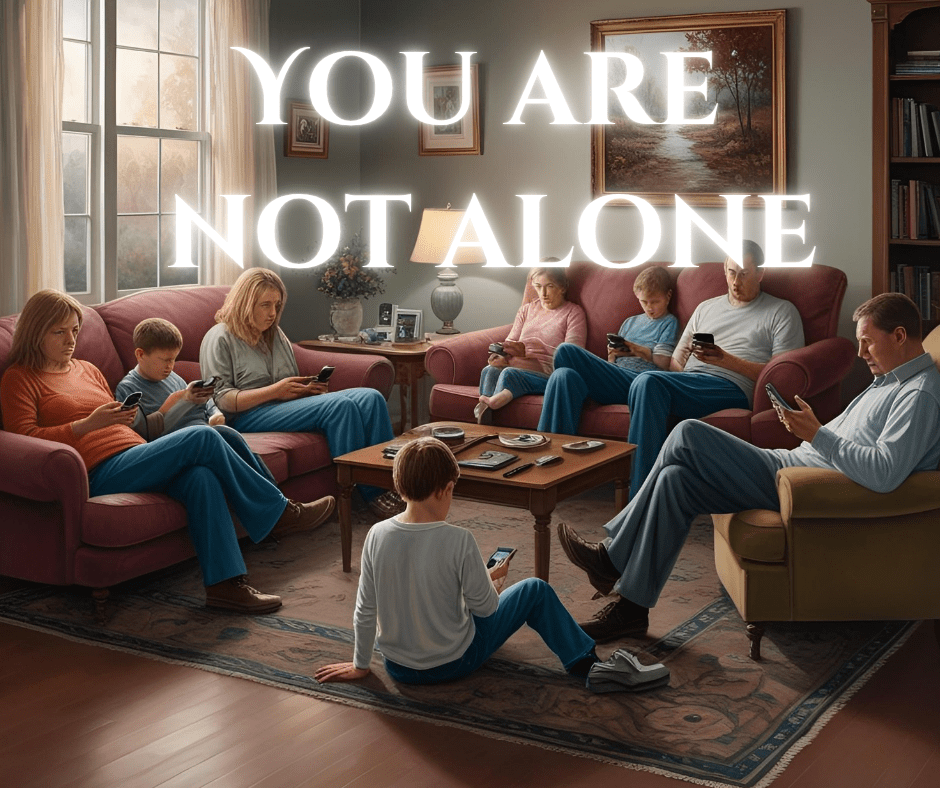
For a long time, I didn’t know that my family was “dysfunctional.” It was just “normal” to me—the way things were. The shouting, the silence, the walking on eggshells, the roles we all played without being asked. It took growing up and stepping away to realize: what I thought was normal was actually deeply unhealthy.
If you come from a dysfunctional family, you probably know that realization. It hits you slowly—or all at once—that the environment you were raised in shaped how you see yourself, how you trust others, and how you navigate the world. And while every story is different, many of us carry the same quiet ache, the same patterns, the same questions:
Was it really that bad?
Why do I still feel like this?
Can I ever be free of it?

The Hidden Cost of Dysfunction
A dysfunctional family doesn’t necessarily mean constant fighting or dramatic scenes.
Sometimes it looks like cold distance.
Sometimes it’s overcontrol masked as concern.
Sometimes it’s chaos you had to make sense of way too young.
You might have had to play the “responsible one,” taking care of younger siblings—or even your parents. Or maybe you were the scapegoat, blamed for problems you didn’t cause. Or the invisible one, staying quiet to avoid becoming a target.
These roles follow us into adulthood, nto friendships, into love.
You learn to stay small, to avoid conflict, to keep people happy—even at the cost of your own needs.
You might struggle with boundaries, or with feeling worthy. You might distrust calm, because your nervous system only understands chaos.
And that’s not your fault.

Owning Your Story
Here’s what I’ve learned: coming from a dysfunctional family doesn’t mean you’re broken. It means you adapted in the only ways you could.
You did what it took to survive, to keep the peace, to feel some sense of control in a world that often made you feel powerless. But survival is not the same as living. At some point, if you’re lucky (and willing), you start to question those old patterns. You start to ask:
What do I really believe about myself?
Whose voice is that in my head?
What does safety even look like?
It’s not easy – everyone says.
I will not agree, just modify it: Healing can be quick, easy and permanentl with a right guidance, techniques and accountability buddy.
Since I’ve discovered and trained in Belief Coding everything started to change.
Only because I found it at my age of 45 it will take a while to heal each parts of me, each pattern I followed, each behavior I copied day by day for years.

Rewriting the Script
Healing means setting boundaries, even if it feels terrifying ( it wont be terrifyingif you go through Belief Coding session).
It means grieving what you didn’t get—love without conditions, a sense of safety, someone who really saw you.
It means finding people who “do” see you now, and learning to trust that not every calm moment is a setup for disappointment.
It might also mean going no-contact. Or forgiving without reconnecting. Or choosing a chosen family that treats you with care and respect.
All of that is valid and maybe most importantly: it means forgiving “yourself”—for not knowing, for the ways you coped, for the mistakes you made while trying to unlearn what never should’ve been taught.
You’re Not Alone
If any of this resonates, I want you to know:
you’re not crazy
you’re not dramatic.
And you’re definitely not alone.
Coming from a dysfunctional family doesn’t define you. But acknowledging it—facing it—can be the beginning of something incredibly powerful: your healing, our freedom. Your story, written on your terms.
And that’s something worth fighting for.
If you ready for a change.
If you want to do it Quickly, Efficiently and Permanently contact with me and we find out the best path for you. Free call
 Optimistic Recharge
Leave a comment